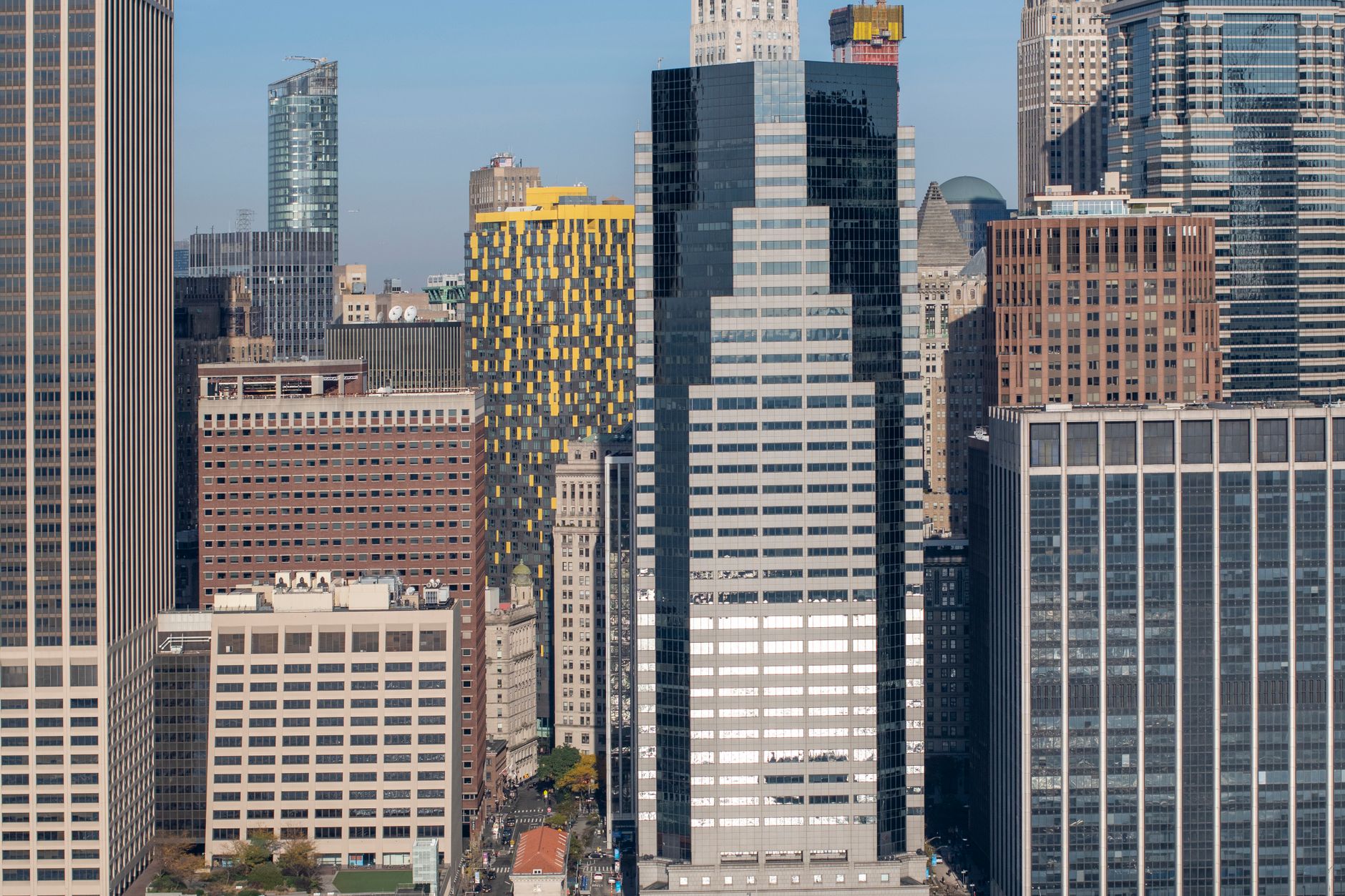
Major line items include New York State and City transfer taxes, mortgage recording tax, title insurance, attorney fees, and lender charges.
What Transfer Taxes Apply to Manhattan Commercial Property Purchases?
New York layers multiple transfer taxes on commercial real estate transactions, and understanding each one before you sign a contract is essential. New York State imposes a Real Estate Transfer Tax at a rate of two dollars for every five hundred dollars (or fraction thereof) of consideration, which equals 0.4% of the purchase price (tax.ny.gov). This tax applies to any conveyance where consideration exceeds $500 (tax.ny.gov). Both taxes are nominally the seller's obligation, but commercial purchase contracts routinely shift city transfer tax liability to the buyer through negotiated allocation language. Buyers should review this allocation carefully before executing a contract, because accepting the city RPPT can add hundreds of thousands of dollars to their closing budget. RPPT filings must be submitted to the NYC Department of Finance at or before closing, and failure to file on time carries penalties. In Manhattan commercial transactions, transfer tax exposure is one of the first numbers a serious underwriter confirms.
How Are Transfer Tax Rates Structured for Large Commercial Deals?
For larger Manhattan commercial acquisitions, the Mansion Tax is an important consideration — however, under NYS Tax Law §1402-a, the Mansion Tax applies only to conveyances of residential real property used as a personal residence where consideration is $1 million or more, and does not apply to commercial real estate transactions, which are instead subject to the NYC Real Property Transfer Tax and the NYS Real Estate Transfer Tax (tax.ny.gov). Transactions structured through LLCs or foreign entities are generally subject to transfer tax, but may qualify for a full or partial exemption under the 'mere change of identity or form of ownership' rule (NYC Admin. Code §11-2106(b)(8); NYS Tax Law §1405(b)(6)) to the extent that beneficial ownership of the property remains unchanged after the transfer. Tax counsel should review the contract's allocation clause before signing.
What Is the Mortgage Recording Tax and How Much Does It Cost?
The Mortgage Recording Tax is one of Manhattan's most costly and least-discussed closing line items for financed commercial acquisitions. This is not a lender fee and it is not negotiable. The MRT applies to new originations, refinances, and building loan agreements. All-cash buyers have no MRT obligation, since the tax is imposed only when a mortgage is recorded and no mortgage is obtained in an all-cash transaction, which creates a meaningful cost advantage in competitive bidding situations where a cash offer at a lower gross price can net more to the seller than a financed offer at face value. Buyers using bridge or construction financing face higher MRT exposure because these loan structures typically carry larger initial loan amounts than permanent financing, and each new mortgage recording triggers a fresh MRT obligation.
How Can Buyers Reduce Mortgage Recording Tax Through a CEMA?
A Consolidation, Extension, and Modification Agreement, commonly called a CEMA, is the primary legal mechanism for reducing MRT exposure on a financed Manhattan commercial acquisition. In a CEMA, the buyer assumes the seller's existing mortgage and consolidates it with new financing, paying MRT only on the incremental new loan amount rather than the full new mortgage, as tax is imposed solely on any new or further indebtedness created by the additional instrument (NY Tax Law §255). This structure requires cooperation from both the existing lender holding the seller's note and the buyer's new lender, which is not always guaranteed. CEMA 거래는 일반적으로 클로징까지 표준 대출보다 상당한 추가 시간이 소요될 수 있다는 점을 감안해야 한다 (quickenloans.com). Buyers should raise the CEMA question early in due diligence, before the term sheet is finalized, so lender eligibility and existing loan terms can be confirmed. Not all lenders participate. This is a strategic decision, not a routine one.
Title Insurance, Legal Fees, and Due Diligence Costs in Manhattan
Beyond transfer and mortgage taxes, the practical costs of commercial due diligence and closing administration in Manhattan add up quickly. Title insurance for commercial properties is priced per promulgated TIRSA rates based on the purchase price and loan amount. For a Manhattan commercial acquisition, the environmental assessment is a non-negotiable due diligence item. 맨해튼 상업용 부동산의 경우 부동산 현황 보고서, 측량(ALTA 기준 소규모 필지 $3,000부터 일반 상업용 $8,000~$15,000 이상), 용도지역 분석($500~$700) 비용은 합산 $5,000~$15,000 이상이 추가될 수 있으며, 필지 규모와 복잡도에 따라 상한을 초과하는 경우도 있다. NYC DOF and HPD searches, UCC searches, and judgment searches are ordered through the title company and billed to the buyer.
Attorney fees are a significant and often underestimated closing cost in Manhattan commercial deals. These are not soft costs to be minimized. Quality transaction counsel protects the buyer's contractual position, reviews title exceptions, and coordinates the FIRPTA and transfer tax compliance that can create liability if mishandled.
What Does a Lender Require at Closing for Commercial Loans?
Commercial lenders in Manhattan impose their own set of closing conditions that translate directly into buyer-side costs. 대출 처리·심사·신청 수수료는 대출기관에 따라 상이하며, 업계 기준으로 일반적으로 $4,000~$12,000 수준이나 대출 규모에 따라 대출금액의 0.25%~2.0%로 산정되는 경우도 있다 (tax.ny.gov). Lenders also require environmental reports, surveys, and property condition assessments as conditions of loan approval, meaning these due diligence costs are effectively mandatory for any financed acquisition regardless of the buyer's own preference. Buyers should request a full lender fee schedule at the term sheet stage so these costs can be modeled into the acquisition budget before the letter of intent is executed.
How Closing Costs Differ for Foreign and Institutional Buyers in Manhattan
Foreign and institutional buyers face a distinct layer of closing costs and structural requirements that domestic individual buyers do not encounter. This section is where many cross-border acquisitions run into unexpected expenses. Foreign buyers, including Korean investors acquiring Manhattan commercial real estate, must consider FIRPTA withholding at the acquisition stage even though withholding is triggered at disposition. The entity structure chosen at purchase determines the FIRPTA withholding rate and calculation method when the property is eventually sold. A Korean investor purchasing directly as an individual or through a Korean domestic corporation faces greater FIRPTA complexity and potential double-taxation risk compared to a buyer who acquires through a properly structured U.S. LLC or C-corporation reviewed by counsel familiar with the U.S.-Korea tax treaty. 뉴욕주에서 설립된 LLC의 경우, 공고(publication) 요건 준수 비용은 카운티에 따라 크게 다르며, 맨해튼(뉴욕 카운티) 기준으로는 신문 게재 비용과 주 공고증명서 제출 수수료($50) 포함 통상 $1,450~$1,950 이상이 발생한다 (llcpublishers.com).
Institutional buyers structured through funds or REITs face additional documentation requirements at closing. Organizational certificates, legal opinions regarding entity authority, board or partnership resolutions, and good-standing certificates from the fund's formation state are typically required by title companies and lenders. Foreign national buyers should also budget for currency conversion costs and international wire transfer fees if funds are being moved from non-USD accounts. At Penn Plaza Property, we work specifically with Korean investors navigating these requirements alongside qualified U.S. legal and tax professionals, providing bilingual advisory support that bridges Korean investor expectations with Manhattan market realities from the first site visit through closing.
Why Does Entity Structuring Matter for Korean Investors Buying Manhattan Commercial Property?
For Korean investors entering Manhattan commercial real estate, the entity structure chosen at acquisition is not an administrative detail. It is a strategic decision with long-term tax and liability consequences. Holding U.S. commercial property through a properly structured U.S. entity can reduce FIRPTA withholding exposure at disposition and provide liability protection that a direct individual purchase does not offer. A Korean investor using a domestic Korean corporation as the direct purchaser faces greater FIRPTA complexity and potential double-taxation risk under the interplay between Korean domestic tax rules and U.S. withholding requirements. A U.S.-based LLC or C-corporation holding structure reviewed by tax counsel familiar with the U.S.-Korea tax treaty is generally recommended. The cost of getting this right at acquisition, which may be $5,000 to $15,000 in additional legal and tax advisory fees, is small relative to the tax exposure avoided at a future sale (tax.ny.gov). Cross-border investors should retain both a U.S. real estate attorney and a U.S. tax advisor before signing a contract.
How to Budget Closing Costs Into Your Manhattan Commercial Acquisition Model
Building closing costs into a Manhattan commercial acquisition model requires separating each cost category by who bears it and when it is paid. A practical model separates seller-side costs (typically the state transfer tax and part or all of the RPTT depending on contract allocation) from buyer-side costs (MRT, title insurance, legal fees, lender fees, and due diligence). The contract allocation of transfer taxes must be confirmed before underwriting, because assuming the seller bears all transfer taxes when the contract actually shifts city RPTT to the buyer can misstate the acquisition cost by hundreds of thousands of dollars. In a competitive acquisition environment, buyers who underestimate closing costs submit bids that look stronger than they are, only to face a budget gap after due diligence is complete. Cap rate and cash-on-cash return projections that ignore closing costs will overstate actual yield.
Building and co-op-specific fees are another closing cost category that surprises buyers in certain Manhattan commercial structures. Mixed-use properties with residential components may carry building board application fees, move-in deposits, and flip tax obligations that are separate from the standard commercial closing cost stack. These vary by building and deal structure, and they are not always disclosed on the term sheet. Buyers should confirm with the title company and seller's counsel whether any building-level fees apply before finalizing the acquisition budget.
What Is a Realistic Closing Cost Estimate by Deal Size?
The table below provides a structured estimate of Manhattan commercial closing costs by deal size and financing method. These figures are estimates based on standard market rates, full title coverage, and legal representation for both buyer and lender. Actual costs vary based on contract allocation, lender selection, and deal complexity.
Caption: Manhattan Commercial Closing Cost Estimates by Deal Size and Financing Method. Figures are estimates. Transfer taxes reflect buyer-side allocation of city RPTT. Mansion Tax rates sourced from current NYC schedule.
All-cash buyers at any deal size avoid the MRT component entirely, which is a concrete competitive advantage. Budget these costs at the letter of intent stage. Do not wait for the attorney review period to discover the true cost of the transaction.
Frequently Asked Questions
Who pays transfer taxes on a Manhattan commercial property sale, the buyer or the seller?
Is there a way to avoid or reduce the Mortgage Recording Tax on a Manhattan commercial acquisition?
Do closing costs differ between buying an office building, a retail property, and a multifamily building in Manhattan?
What are the closing costs for a foreign buyer purchasing Manhattan commercial real estate through an LLC?
Does the NYC Mansion Tax apply to commercial properties, or only residential?
How long does a typical commercial closing take in Manhattan, and when are closing costs paid?
Are there any closing costs that can be negotiated or split between buyer and seller?
What is title insurance and is it required for commercial purchases in New York City?
What are the typical closing costs for a commercial property in Manhattan?
How do mansion taxes and mortgage recording taxes impact the overall cost?
Are there any additional fees associated with commercial property purchases in Manhattan?
How do transfer taxes differ for residential versus commercial properties in NYC?
What is the average broker commission for commercial properties in Manhattan?
Sources & References
- New York State Department of Taxation and Finance — Real Estate Transfer Tax (opens in a new tab)[gov]
- NYC Mansion Tax Rates 2026 — Luxury Price Drops (opens in a new tab)[industry]
- A3E Environmental — Phase I ESA Cost Guide (opens in a new tab)[industry]
- Solutions in the Land — Phase I ESA Cost Guide 2026 (opens in a new tab)[industry]
- Real Estate Transfer Tax – New York State Department of Taxation and Finance (opens in a new tab)[factcheck]
- Real Property Transfer Tax (RPTT) – NYC Department of Finance (opens in a new tab)[factcheck]
- FIRPTA withholding | Internal Revenue Service (opens in a new tab)[factcheck]
- Statistical Profile of New York City Mortgage Recording Tax (MRT) (2024) — NYC Government Publication (opens in a new tab)[factcheck]
About the Author
Penn Plaza Property
Penn Plaza Property is a New York City real estate advisory firm specializing in commercial leasing, investment sales, and asset positioning for private investors, institutional capital, and Korean foreign investors across Manhattan, Brooklyn, and Queens.
Learn more at pennplazaproperty.com → (opens in a new tab)Related Posts
Where Should a Korean Investor Park $10M in NYC Real Estate Right Now?
Korean investors with $10M to deploy in NYC real estate face a bifurcated market with clear opportunity if you know where to look. This guide breaks down the four strongest asset classes by submarket, cap rate, and risk profile, with cross-border tax structuring considerations built in.
10 min read
What Is Last-Mile Industrial Real Estate and Why Are NYC Investors Paying a Premium?
Last-mile industrial real estate refers to small-to-mid-size warehouse and logistics facilities located close to dense urban consumers, designed to enable same-day and next-day delivery. In New York City, chronic land scarcity and surging e-commerce demand have pushed Brooklyn and Queens industrial rents to historic highs. This post defines the asset class and explains the structural forces driving NYC's premium valuations.
6 min read
How Does a Korean Investor Repatriate Profits from a U.S. Real Estate Sale?
Repatriating profits from a U.S. real estate sale involves clearing FIRPTA withholding, filing a U.S. tax return, and wiring net proceeds through a compliant bank channel. This guide walks Korean investors through each step, from closing-day obligations to final fund transfer to Korea.
10 min read