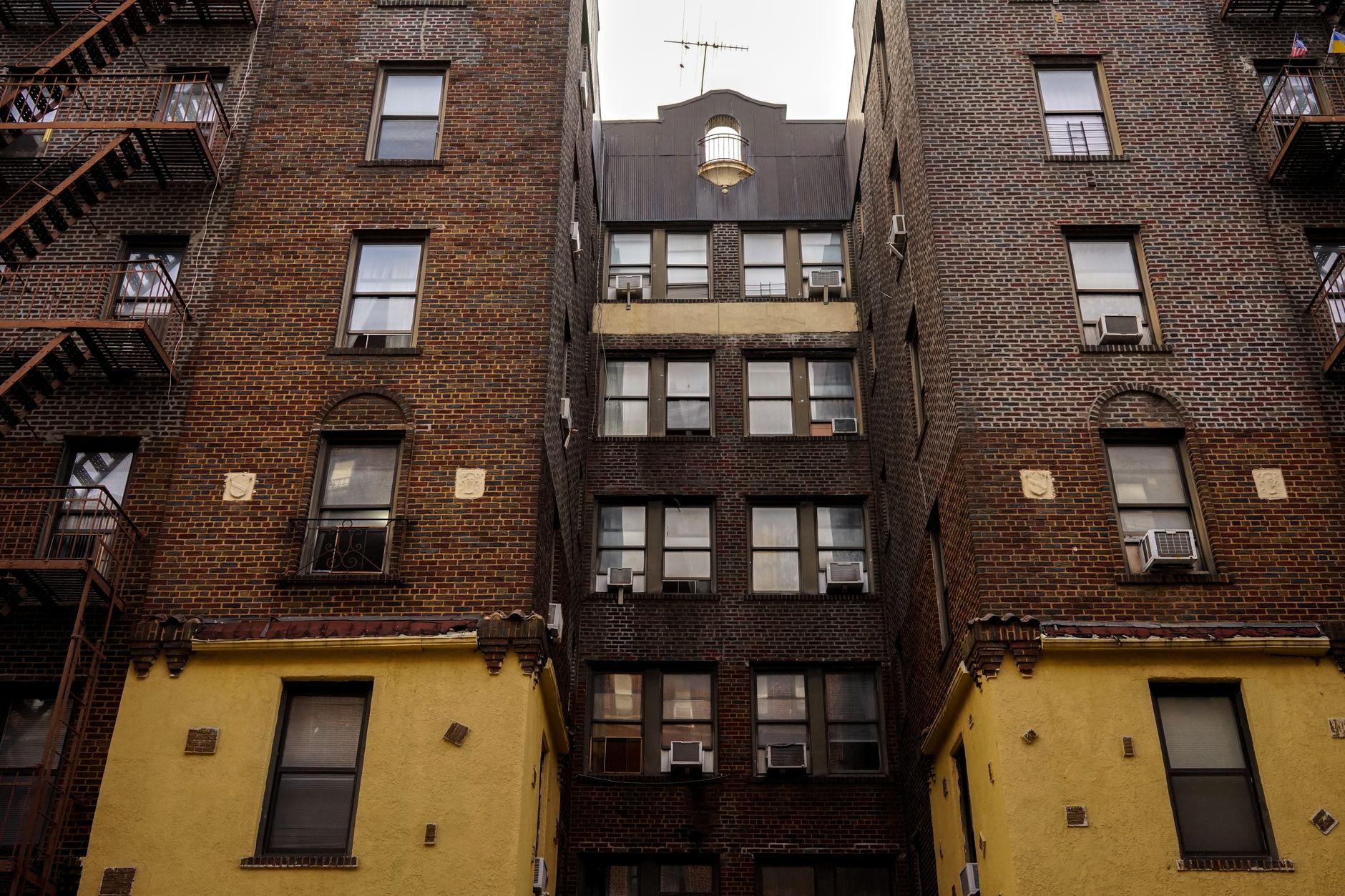
Investing in NYC rent-stabilized buildings in 2026 delivers stable occupancy and long-term appreciation, but returns depend on vacancy levels, below-market rent rolls, and regulatory exposure under the 2019 Housing Stability and Tenant Protection Act.
What Are NYC Rent-Stabilized Buildings and How Do They Work?
NYC rent stabilization is not a niche policy. It is the structural backbone of the city's rental market. For investors in Manhattan, Brooklyn, and Queens, this is not a corner case. It is the dominant asset class in residential multifamily.
Rent-stabilized apartments are governed by New York State's Rent Stabilization Law, which generally covers buildings with six or more units built before 1974, plus certain newer buildings that received tax benefits such as 421-a. The NYC Rent Guidelines Board (RGB) sets the maximum allowable rent increase each year. That 17-percentage-point shortfall between cost growth and revenue growth is the central tension every stabilized building investor must underwrite against.
How Does the 2019 HSTPA Change the Investment Equation?
The 2019 Housing Stability and Tenant Protection Act fundamentally restructured the economics of rent-stabilized ownership, and its effects continue to ripple through 2026 transactions. Before HSTPA, investors could execute a recognizable playbook: acquire buildings with below-market rents, accelerate turnover through preferential rent resets, and use high-rent vacancy decontrol to exit stabilization entirely. Each of those levers is now gone.
HSTPA eliminated high-rent vacancy decontrol, meaning no apartment can ever exit stabilization based on rent level alone. Under HSTPA, preferential rents are locked in for the duration of the current tenant's tenancy and cannot be reset at lease renewal; however, upon vacancy (turnover), the owner may charge the incoming tenant the full legal regulated rent. For investors who underwrote pre-HSTPA buildings assuming deregulation upside, the results have been severe. The investment thesis for stabilized assets must be rebuilt from the ground up using post-HSTPA mechanics only.
Which NYC Submarkets Have the Highest Concentration of Stabilized Stock?
Geography shapes stabilized investment opportunity more than most investors initially appreciate. Upper Manhattan, including Washington Heights, Inwood, and East Harlem, carries among the densest stabilized inventory relative to total housing stock, and these corridors have historically offered larger rent-to-market gaps than Manhattan's premium zip codes. Western Queens, covering Astoria, Jackson Heights, and Sunnyside, and central Brooklyn, including Crown Heights, Flatbush, and Bed-Stuy, present stabilized portfolios typically transacted as 10 to 30 unit walk-up buildings at lower per-unit entry prices than comparable Manhattan apartment buildings.
Manhattan's Upper West Side and Upper East Side stabilized buildings command premium acquisition prices because tenant demand in those corridors is exceptionally deep. The trade-off is compressed cap rates that leave less cushion for operating cost volatility. Brooklyn submarkets are increasingly attracting institutional capital seeking scale across multiple smaller buildings. At Penn Plaza Property, we track off-market pipeline across all three boroughs because each submarket demands a different underwriting model.
What Are the Key Risks of Investing in Rent-Stabilized NYC Properties?
Regulatory risk sits at the top of every risk register for stabilized assets. These figures describe today's environment, not a hypothetical stress scenario.
Operating cost inflation compounds the regulatory ceiling. NYC citywide market value reached $1.659 trillion, up 5.4% over the prior year, with taxable value rising to $325.8 billion, up 5.6% (rosenbergestis.com). Rising assessed values at a stable high rate means property tax bills climb year over year even without a rate change. Insurance premiums and labor costs for building staff follow similar trajectories. When rent growth is capped and costs inflate freely, NOI compression is structural, not cyclical.
Distress risk and leverage dynamics are underappreciated by many buyers. Investors who used bridge financing on a value-add stabilized thesis and projected rapid unit turnover face the sharpest refinancing risk. These are not outliers. They are data points.
How Does Debt Service Coverage Ratio Affect Stabilized Building Viability?
Debt service coverage is where stabilized building investing gets quantitatively difficult. A building with compressed NOI, capped rent growth, and rising property taxes can fail a 1.25x DSCR test even at moderate leverage. Stress-testing debt service under flat or zero rent increase scenarios is not conservative underwriting. It is required underwriting for any stabilized acquisition in 2026. In our experience, buyers who model aggressive rent growth assumptions without stress-testing to zero-percent RGB scenarios frequently encounter refinancing challenges when actual rent increases fall short of projections.
The practical implication is that many stabilized deals only pencil as all-cash or low-leverage acquisitions where cash flow is secondary to long-term appreciation. Investors seeking positive leverage at current rates will find the stabilized sector challenging. That is not a reason to avoid the sector. It is a reason to enter with precise capital structure.
What Legal and Compliance Risks Should Buyers Audit Before Closing?
Legal due diligence on stabilized buildings is substantially more complex than on free-market assets. For each stabilized unit, investors should request a full DHCR rent registration history through the HCR online portal or Ask HCR inquiry system (not Form RA-90, which is a lease-renewal complaint form); under HSTPA 2019, the overcharge lookback period is unlimited — not capped at six years — so due diligence should seek the complete available registration history back to 1984 and reconcile it against the seller's rent roll. Discrepancies between registered rents and collected rents can create rent overcharge liability that survives closing. Under NY Rent Stabilization Code § 2526.1(f)(2), a current (successor) owner is generally responsible for all overcharge penalties, including those collected by any prior owner — but the prior owner is not released from liability, and limited exceptions apply where title passes through a judicial sale, foreclosure, or bankruptcy proceeding without rent records being provided. HPD violation history, open building code violations, and Local Law 11 facade inspection compliance must all be reviewed before committing to a purchase price.
J-51 and 421-a tax benefit status determines both stabilization coverage and tax burden. Buildings approaching 421-a expiration create a complex regulatory transition that buyers must model explicitly. Lead paint and asbestos compliance records matter in pre-1978 buildings, as non-compliance creates liability that survives acquisition. Regulatory compliance is not a checkbox. It is a valuation input.
What Are the Real Rewards and Return Drivers for Stabilized Building Investors?
The risks are real and well-documented. The rewards require more careful framing because they are structural rather than transactional. Stabilized buildings provide occupancy stability that free-market assets cannot match. Stabilized tenants, insulated from market rent volatility, rarely vacate voluntarily, creating a near-zero vacancy environment in strong demand corridors. This steady occupancy, even at below-market rents, produces consistent NOI that performs predictably through economic cycles. Low delinquency risk accompanies low vacancy risk. These two factors together make stabilized cash flow more reliable than its compressed cap rate might imply.
This data reflects a period of active RGB increases following pandemic-era freezes, and it illustrates that when the regulatory environment is favorable, stabilized NOI growth can outpace operating cost growth meaningfully.
How Does Natural Turnover Create Upside in a Post-HSTPA Environment?
Natural vacancy turnover remains the primary legal mechanism for improving NOI in a stabilized building after HSTPA. When a tenant vacates, a landlord can complete IAI improvements within the capped limits and charge the legal regulated rent on the new lease, reset to reflect the improvement allowance. In buildings with large gaps between legal regulated rents and neighborhood market rents, even modest turnover rates over a 7 to 10 year hold can materially increase the aggregate rent roll.
Buildings in corridors like Bushwick, East Harlem, and Astoria, where legal rents are often well below current market levels for comparable free-market units, show the strongest turnover-driven upside. Operational improvements also contribute. Tightening expense management, renegotiating service contracts, and addressing deferred maintenance to reduce emergency repair costs can improve NOI within the constraints of capped revenue. The path to NOI growth in a stabilized building is operational and incremental, not transactional. Investors who understand that outperform those seeking a repositioning shortcut.
Why Do Institutional Investors Still Target Stabilized NYC Assets in 2026?
Inflation resistance and portfolio diversification drive continued institutional interest in NYC stabilized multifamily, even against the backdrop of post-HSTPA value compression. Stabilized buildings sit on land in one of the most supply-constrained real estate markets in the United States. Land value appreciates regardless of income constraints on the building above it. For institutional portfolios seeking dollar-denominated assets with low correlation to equity market volatility, stabilized NYC buildings offer a unique combination of predictable income, embedded land value, and long-term appreciation potential.
Portfolio acquisitions of 20 to 50 unit buildings in Brooklyn and Queens allow institutional capital to achieve scale without the premium pricing of Manhattan. That gap between transaction volume and dollar volume reflects the lower per-building pricing of stabilized assets, creating accessible entry points for mid-market capital.
How to Underwrite and Evaluate a Rent-Stabilized Building Acquisition
Underwriting a stabilized building acquisition in 2026 requires rejecting the seller's rent roll as a starting point. The DHCR-registered legal rent for each unit is the only reliable number. Pull DHCR rent history for every apartment through the HCR online portal or Ask HCR inquiry system, seeking the complete available registration history back to 1984 given HSTPA's unlimited lookback period. Reconcile every unit against the rent roll. Discrepancies are common and they carry overcharge liability implications that affect both price and post-closing exposure.
Underwrite to current NOI without assuming vacancy improvement unless the building's 3 to 5 year unit turnover history specifically justifies it.
The comparison below captures the fundamental trade-offs across asset types that every NYC multifamily investor should internalize before committing capital.
What Due Diligence Steps Are Non-Negotiable for Stabilized Acquisitions?
Verifying rent rolls unit by unit against DHCR registration history is the single most consequential due diligence step in a stabilized acquisition. A seller's rent roll reflects collected rents. DHCR records reflect legal rents. When collected rent exceeds legal rent without proper documentation of IAI or MCI increases, the building has overcharge exposure. Under NY Rent Stabilization Code § 2526.1(f)(2), that exposure follows the building and transfers to the buyer at closing — but the prior owner is not released from liability — making it essential to address overcharge risk explicitly in the purchase agreement.
Beyond rent verification, buyers must engage a NYC real estate attorney with stabilization expertise to review lease riders, IAI filing histories, and any pending MCI orders. A full physical inspection covering roof, boiler, plumbing, and electrical systems generates capital expenditure projections that feed directly into underwriting. Property tax assessment history should be reviewed alongside any tax abatement expiration schedules. A J-51 abatement expiring in year three of a hold period will spike carrying costs in a year that the underwriting may not have anticipated. These are solvable problems with proper diligence. They become expensive surprises without it.
How Should Foreign Investors Structure a Stabilized Building Purchase?
Foreign investors, particularly Korean institutional and high-net-worth buyers, face an additional structural layer beyond the regulatory complexity of stabilized ownership. The U.S.-Korea tax treaty does not reduce FIRPTA withholding on direct U.S. real property sales, as Article 16 explicitly preserves U.S. taxing rights on real property gains; Korean investors should instead consult a cross-border CPA about structural approaches (e.g., LLC check-the-box elections, withholding certificates via Form 8288-B) to manage FIRPTA exposure. Entity structuring decisions made at purchase have long-term implications for estate planning, 1031 exchange eligibility, and profit repatriation.
2026 Market Conditions: Where Stabilized Buildings Offer the Best Opportunity
The 2026 stabilized investment landscape is bifurcated. Off-market acquisitions, sourced through broker relationships, estate sales, and direct owner outreach, continue to offer meaningful cap rate advantages over widely marketed listings. Smaller 6 to 20 unit buildings with owner-operators approaching retirement represent the most accessible off-market pipeline in Brooklyn and Queens. These sellers often prioritize certainty of close and relationship-based transactions over maximum price, creating pricing opportunities unavailable on marketed deals.
Brooklyn submarkets including Crown Heights, Flatbush, and Bed-Stuy attract value-add stabilized buyers because below-market rent rolls in those neighborhoods carry meaningful turnover upside relative to current neighborhood market rents. Queens corridors, including Jackson Heights, Elmhurst, and Sunnyside, offer stabilized inventory at lower per-unit entry prices than Brooklyn with comparable transit connectivity. Manhattan stabilized buildings trade at premium pricing but offer the strongest long-term appreciation and demand fundamentals. NYC citywide taxable assessed value rose 5.6% for the 2026/27 tax year (rosenbergestis.com), confirming that property tax pressure will continue to weigh on NOI even as stabilized rent growth remains constrained.
Buildings with 421-a expirations approaching in 2026 or 2027 require special attention. The loss of that tax benefit increases effective operating costs materially and may simultaneously change the stabilization status of certain units. Buyers must model the post-abatement operating pro forma explicitly. Mixed-use buildings with commercial ground-floor units offer a free-market income component that partially offsets residential income caps, making them attractive for investors seeking both yield and appreciation exposure in a single asset.
Why Is Off-Market Deal Sourcing Critical in the Stabilized Sector in 2026?
The distress evident in the stabilized sector since HSTPA has not uniformly translated into distressed pricing on the open market. Owners who can hold are holding, keeping marketed inventory tight. Buyers entering at 2026 market pricing, particularly through off-market multifamily deals, acquire at levels that already reflect post-HSTPA fundamentals. That reset is precisely where long-term appreciation potential re-enters the equation. Deal sourcing is the first and most important alpha driver in this market.
Frequently Asked Questions
Can a rent-stabilized apartment ever become deregulated in NYC after the 2019 HSTPA?
What is the current NYC Rent Guidelines Board increase for 2025-2026 lease renewals?
How do I verify the legal regulated rent for a rent-stabilized apartment before purchasing a building?
What is the difference between rent-stabilized and rent-controlled apartments in NYC?
How does FIRPTA affect Korean or other foreign investors buying NYC rent-stabilized buildings?
What cap rate should I expect when purchasing a rent-stabilized building in Brooklyn or Queens in 2026?
Are tenant buyout agreements still legal and practical in rent-stabilized NYC buildings?
What tax benefits like 421-a or J-51 should I look for when evaluating a stabilized building purchase?
What are the biggest risks of buying rent-stabilized buildings in NYC?
How do rent guidelines affect returns for NYC landlords in 2026?
Which NYC rent-stabilized properties are most likely to be exempt?
How can investors underwrite a rent-stabilized multifamily deal?
What legal changes could impact NYC rent-stabilized investments?
Sources & References
- NYC Rent Guidelines Board — 2025 Income and Expense Study (opens in a new tab)[gov]
- Residential Tenants' Rights Guide | New York State Attorney General (opens in a new tab)[factcheck]
- Strengthening New York State Rent Regulations – NYS Homes and Community Renewal (HCR), February 2020 (opens in a new tab)[factcheck]
- NYC Department of Finance – FY27 Tentative Assessment Roll Press Release (opens in a new tab)[factcheck]
- Lead-Based Paint Disclosure Rule (Section 1018 of Title X) | US EPA (opens in a new tab)[factcheck]
About the Author
Penn Plaza Property
Penn Plaza Property is a New York City real estate advisory firm specializing in commercial leasing, investment sales, and asset positioning for private investors, institutional capital, and Korean foreign investors across Manhattan, Brooklyn, and Queens.
Learn more at pennplazaproperty.com → (opens in a new tab)Related Posts
Where Should a Korean Investor Park $10M in NYC Real Estate Right Now?
Korean investors with $10M to deploy in NYC real estate face a bifurcated market with clear opportunity if you know where to look. This guide breaks down the four strongest asset classes by submarket, cap rate, and risk profile, with cross-border tax structuring considerations built in.
10 min read
What Is Last-Mile Industrial Real Estate and Why Are NYC Investors Paying a Premium?
Last-mile industrial real estate refers to small-to-mid-size warehouse and logistics facilities located close to dense urban consumers, designed to enable same-day and next-day delivery. In New York City, chronic land scarcity and surging e-commerce demand have pushed Brooklyn and Queens industrial rents to historic highs. This post defines the asset class and explains the structural forces driving NYC's premium valuations.
6 min read
How Does a Korean Investor Repatriate Profits from a U.S. Real Estate Sale?
Repatriating profits from a U.S. real estate sale involves clearing FIRPTA withholding, filing a U.S. tax return, and wiring net proceeds through a compliant bank channel. This guide walks Korean investors through each step, from closing-day obligations to final fund transfer to Korea.
10 min read