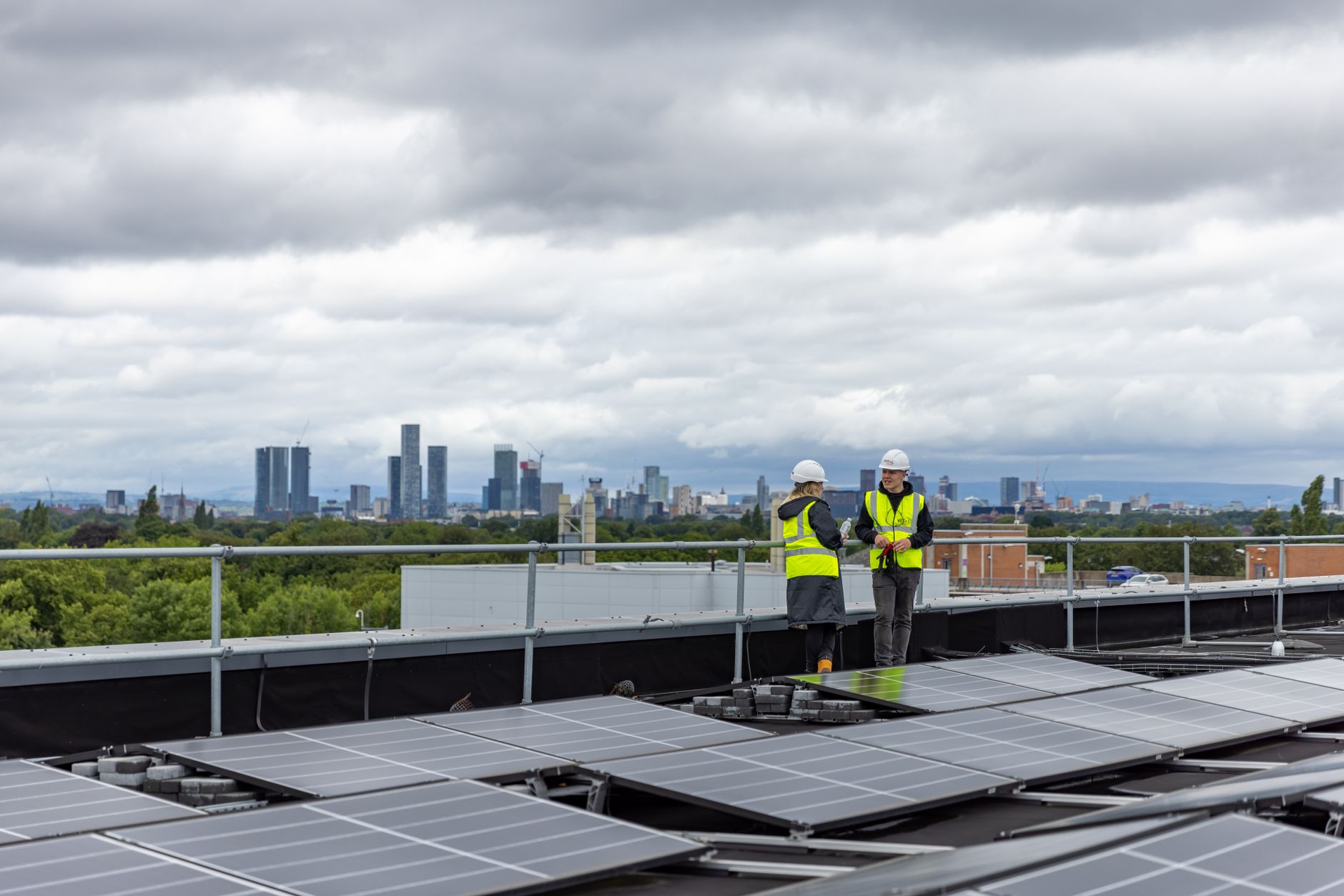
Local Law 97 caps carbon emissions for NYC buildings over 25,000 square feet. Enforceable limits are already in effect since 2024. Dramatically stricter thresholds arrive in 2030.
What Is Local Law 97 and Which Buildings Does It Cover?
Local Law 97 is the cornerstone of NYC's Climate Mobilization Act, passed in 2019 and now actively enforced. NYC buildings contribute 71% (council.nyc.gov) of all citywide greenhouse gas emissions. This is why the law targets the built environment aggressively. Approximately 50,000 buildings across the five boroughs must meet annual carbon emissions caps (dobguard.com). The threshold is clear: most buildings over 25,000 square feet are covered, spanning residential, commercial, institutional, and mixed-use properties (nyc.gov). The law's overarching goal is to reduce emissions from the city's largest buildings 40% by 2030 and reach net zero by 2050 (nyc.gov). For Manhattan property owners, Brooklyn multifamily investors, and Queens commercial landlords alike, this is not a future risk. Compliance is already being tested.
How Are Emissions Limits Calculated Under Local Law 97?
The law assigns each building an annual carbon budget based on its occupancy type and gross floor area. Limits are expressed in kilograms of CO2 equivalent per square foot per year (kgCO2e/sf/yr), and each occupancy group, including residential, office, retail, hotel, and industrial, carries a distinct threshold. A building's total annual cap equals its gross floor area multiplied by the occupancy-specific emissions factor. Mixed-use buildings, common across Manhattan and Brooklyn, use a blended calculation weighted by the square footage of each use type. Actual emissions are determined from benchmarking data submitted annually to NYC through the Local Law 84 (LL84) process, which requires energy and water consumption reporting. This means a building's LL97 compliance status is directly tied to its LL84 benchmarking data, and errors in one filing ripple through to the other.
What Are the 2024 and 2030 Compliance Deadlines?
The first compliance period runs from 2024 through 2029. Initial reports covering calendar year 2024 emissions were due May 1, 2025, to the NYC Department of Buildings (DOB). The second and far stricter compliance period begins in 2030, with the required reduction varying significantly by occupancy type — for example, multifamily R-2 buildings must reduce emissions by approximately 50% relative to their 2024–2029 limit, while reductions for other occupancy types can exceed 80% (nyc.gov). The numbers are stark: even if every covered building reduces energy consumption by 30%, over 8,000 buildings will still face penalties exceeding $300 million per year by 2030 (rebny.com). Failure to file annual reports is itself a separate violation from exceeding emissions caps, carrying additional per-square-foot penalties. The compliance clock is already running.
How Are Local Law 97 Penalties Calculated?
The penalty formula is straightforward but financially serious. Penalties compound: a building that remains non-compliant pays the fine every year without relief until it achieves compliance or registers an approved compliance plan. To make this concrete, consider a 200,000 square foot multifamily building in Manhattan that exceeds its cap by 500 metric tons in a given year. Unpaid civil penalties can become liens on the property, directly impairing title and affecting financing. Buildings that register a good-faith Accelerated Compliance Plan with the DOB may receive phased enforcement consideration, but this is not a blanket exemption.
Which Building Types Face the Highest Penalty Exposure?
Not all buildings carry equal risk. According to a 2023 REBNY study projecting 2024 outcomes, over 3,700 NYC buildings were estimated to face a combined $200 million in penalties; however, actual 2024 benchmarking data from NYC Accelerator shows fewer than 10% of covered buildings exceeded their emissions cap for the 2024–2029 compliance period (accelerator.nyc). Residential buildings dominate that pool. By 2030, residential properties are projected to represent nearly 66% of all non-compliant buildings citywide (rebny.com). Steam-heated multifamily buildings are particularly exposed because Con Edison steam carries a high emissions factor. Buildings still burning fuel oil (No. 4 or No. 6) face the largest absolute compliance gaps. Older Class B and Class C office buildings with outdated HVAC systems also rank among the highest-risk assets for Queens and outer-borough investors.
What Do Local Law 97 Compliance Retrofits Actually Cost?
Retrofit costs vary widely, and generic estimates underserve property owners who need real decision-making data. These are appropriate for buildings already close to their emissions cap with minor gaps to close. HVAC tune-ups combined with envelope sealing, including air barrier work and insulation, typically cost $5 to $15 per square foot and deliver moderate emissions reductions of 20 to 40 percent (nyc.gov). Consider a 100,000 square foot Manhattan multifamily building transitioning from oil heat to electrified HVAC. This depends on existing infrastructure conditions. A comprehensive energy overhaul covers envelope improvements, full HVAC electrification, and on-site renewables. Implementation timelines run 24 to 60 months. The key variable is not just system cost but system compatibility with the existing building structure, which an ASHRAE Level II or Level III energy audit will identify.
Are There Financing Options Beyond Owner Capital?
Few Manhattan or Brooklyn building owners will fund major energy retrofits entirely from operating reserves. Fortunately, several financing structures exist specifically for LL97 compliance projects. NYC C-PACE (Commercial Property Assessed Clean Energy) financing allows owners to repay retrofit costs through a special assessment on their property tax bill over a period typically ranging from 20 to 30 years (and up to 35 years in some programs), with the term generally capped by the useful life of the installed equipment, keeping cash flow intact during the project. The NYC Green Bank and NYSERDA both offer below-market-rate loan products designed for Local Law 97 compliance work. For commercial buildings, green leases provide a mechanism to pass through a portion of energy improvement costs to tenants who directly benefit from lower utility bills.
How Do Carbon Credits and RECs Factor Into Compliance?
Under LL97's current rules for the 2024–2029 compliance period, RECs are restricted to offsetting emissions from utility-supplied electricity only — they cannot offset on-site fossil fuel combustion — but there is no quantity cap on REC purchases for buildings on the standard compliance path, meaning electricity-heavy buildings may use RECs as a primary compliance strategy; only buildings on the Good Faith Effort (GFE) decarbonization plan pathway are prohibited from using RECs during the first compliance period. A Registered Accelerated Compliance Plan filed with the DOB may allow a building to phase compliance using a combination of retrofits and limited offsets, providing penalty deferral while major capital work proceeds. Carbon trading under LL97 remains more restricted than federal or voluntary carbon markets, so relying on offsets as a long-term substitute for physical upgrades carries meaningful regulatory and financial risk.
LL97 Compliance Strategy Options at a Glance
Choosing the right compliance pathway depends on a building's current emissions gap, capital availability, hold period, and asset class. The table below summarizes the key options:
| Compliance Strategy | Estimated Cost Range | Penalty Reduction | Timeline to Implement | Best Suited For |
|---|---|---|---|---|
| Lighting + BMS Upgrades Only | $1-$5/sq ft | Partial (10-25%) | 3-12 months | Buildings close to cap with minor gaps |
| HVAC Tune-Up and Envelope Sealing | $5-$15/sq ft | Moderate (20-40% (nyc.gov)) | 6-18 months | Mid-size buildings with aging but functional systems |
| Full HVAC Electrification (Heat Pumps) | $15-$50/sq ft | High (50-100%) | 12-36 months | Buildings on fuel oil or steam with large compliance gaps |
| REC and Carbon Credit Purchases | $10-$50/ton offset | Limited (partial, capped by law) | Immediate | Short-term gap fill while retrofits are planned |
| Registered Accelerated Compliance Plan | Varies by project | Penalty deferral possible | Plan filed within 1-2 months | Buildings with major retrofits requiring multi-year phasing |
| Full Building Energy Overhaul (Envelope + HVAC + Renewables) | $30-$80/sq ft | Full (100%+) | 24-60 months | Large assets held long-term by institutional owners |
How Local Law 97 Affects NYC Real Estate Investment and Asset Valuation
Local Law 97 compliance status has moved from a footnote to a primary underwriting variable in Manhattan commercial real estate investment. Buildings with significant compliance gaps are now subject to buyer discount demands during acquisition due diligence, as the capital expenditure required to achieve compliance reduces net operating income and free cash flow. Major NYC commercial lenders have incorporated LL97 compliance analysis into underwriting for loans on buildings over 25,000 square feet. Conversely, energy-efficient, compliant buildings are increasingly commanding rental premiums from ESG-focused institutional tenants, particularly in Manhattan office submarkets. At Penn Plaza Property, we consistently advise clients to model LL97 retrofit capital as a liability in acquisition pro formas, not as an optional post-close upgrade. Ignoring it at the offer stage creates costly surprises at closing or, worse, after the keys are in hand.
What Should Foreign Investors Know About LL97 Compliance Risk?
For Korean institutional investors and other foreign buyers entering the NYC market, Local Law 97 introduces a layer of complexity beyond standard acquisition diligence. Compliance costs reduce distributable cash flow directly. Leveraged return projections may look attractive on a cap rate basis. But they erode quickly once retrofit obligations are modeled over a 5 to 7 year hold. Accessing federal IRA tax credits and 179D deductions requires domestic entity structuring and a U.S. taxpayer identification number. Foreign entities holding title through offshore structures may be ineligible for these credits, effectively increasing the after-tax cost of compliance. Due diligence for any NYC building over 25,000 square feet should include a certified LL97 compliance audit alongside standard LL84 benchmarking review, title, and environmental reports. In our experience, the most costly mistakes occur when foreign investors or domestic buyers omit LL97 analysis from their initial underwriting, only to discover significant retrofit obligations after closing. This is non-negotiable for value-add properties with aging mechanical systems. NYC property due diligence that omits LL97 analysis is simply incomplete by current market standards.
Building a Local Law 97 Compliance Strategy: Step-by-Step Approach
A structured compliance approach prevents both over-spending on unnecessary retrofits and under-investing in ways that leave penalty exposure unresolved. The first step is benchmarking: pull current building emissions from LL84 filings and compare them against the LL97 caps for each occupancy type present in the building. This establishes the compliance gap in metric tons. The second step is commissioning an ASHRAE Level II or Level III energy audit to identify which specific systems are driving excess emissions, whether boilers, HVAC distribution, building envelope leakage, or lighting. Step three is modeling: calculate the penalty cost over 2024 to 2029 versus the retrofit investment cost, including financing, to determine the break-even horizon. Many Manhattan multifamily building owners find that retrofit financing pays for itself within three to five years when compared against cumulative annual penalties. Step four is engaging a qualified MEP engineer or energy consultant to develop a Capital Improvement Plan and, where applicable, a Registered Accelerated Compliance Plan filed with the NYC DOB. Step five is critical for cost management: apply for NYSERDA, NYC Accelerator, and applicable IRA incentives before committing to contractor selection, as incentive availability can shift project economics meaningfully. Step six is annual reporting. File all required LL97 annual reports with the DOB by May 1 of each year. Missing filings generate separate violations entirely distinct from emissions cap penalties. Step seven is ongoing: reassess compliance status annually, because Con Edison's grid emissions factor updates periodically, and an all-electric building's effective emissions may decrease automatically as NYC's grid gets cleaner moving toward 2030.
How Do Changing Grid Emissions Factors Affect Long-Term Compliance?
One underappreciated aspect of LL97 is the dynamic emissions factor tied to the electrical grid. As NYC adds renewable energy sources, the carbon intensity of grid electricity decreases. Buildings that electrify heating now gain a compounding benefit: their actual reported emissions fall over time even without additional retrofits, because the same kilowatt-hours of electricity carry a lower carbon factor each year. By contrast, buildings that remain on natural gas or steam face a static or worsening emissions profile. This dynamic makes early electrification a strategically sound long-term investment even when near-term capital costs appear high. For long-hold institutional assets in Manhattan and Brooklyn, the calculus strongly favors front-loading electrification rather than paying annual penalties while waiting for technology costs to fall. The 2030 deadline is not far away, and retrofit timelines for large buildings regularly run 12 to 36 months.
Frequently Asked Questions
What is the Local Law 97 penalty per ton of excess CO2 emissions?
Does Local Law 97 apply to buildings under 25,000 square feet?
When is the first Local Law 97 compliance report due to the NYC Department of Buildings?
Can a building owner purchase carbon offsets or RECs to fully comply with Local Law 97?
How does Local Law 97 affect multifamily buildings with rent-stabilized tenants?
What financial incentives are available to help NYC building owners pay for Local Law 97 retrofits?
How does Local Law 97 compliance status affect a building's sale price or financing terms?
Are condominiums and co-ops responsible for Local Law 97 compliance as a whole building?
What happens if a building files its LL97 report late or fails to file at all?
How do Korean or other foreign investors structure entity ownership to access U.S. energy tax credits for LL97 retrofit projects?
What buildings are exempt from Local Law 97?
How are Local Law 97 penalties calculated?
What compliance strategies lower LL97 costs?
What are the 2030 emissions limits under LL97?
Are there financing options for retrofit upgrades?
Sources & References
- LL97 Greenhouse Gas Emissions Reduction - NYC Department of Buildings (opens in a new tab)[gov]
- New Report: Fines on NYC Property Owners for Buildings Emissions Could Exceed $900M Each Year by 2030 - REBNY (opens in a new tab)[org]
- Local Law 97 NYC Explained: Penalties, Compliance & Building Owner Guide - DOBGuard (opens in a new tab)[industry]
- Climate Mobilization Act - NYC Council Data Team (opens in a new tab)[gov]
- Press Release - NYC Department of Buildings (opens in a new tab)[factcheck]
- Climate Mobilization Act - Data Team (NYC Council) (opens in a new tab)[factcheck]
- Local Law 97 Requirements for Reporting Annual Greenhouse Gas Emissions – NYC DOB Article 320 Info Guide (opens in a new tab)[factcheck]
- New Report: Fines on NYC Property Owners for Buildings Emissions Could Exceed $900M Each Year by 2030 | REBNY (opens in a new tab)[factcheck]
- Foreign corporation Form 1120-F filing responsibilities | Internal Revenue Service (opens in a new tab)[factcheck]
- Renewable Energy Certificate Policy for Local Law 97 — NYC Department of Buildings (opens in a new tab)[factcheck]
About the Author
Penn Plaza Property
Penn Plaza Property is a New York City real estate advisory firm specializing in commercial leasing, investment sales, and asset positioning for private investors, institutional capital, and Korean foreign investors across Manhattan, Brooklyn, and Queens.
Learn more at pennplazaproperty.com → (opens in a new tab)Related Posts
Where Should a Korean Investor Park $10M in NYC Real Estate Right Now?
Korean investors with $10M to deploy in NYC real estate face a bifurcated market with clear opportunity if you know where to look. This guide breaks down the four strongest asset classes by submarket, cap rate, and risk profile, with cross-border tax structuring considerations built in.
10 min read
What Is Last-Mile Industrial Real Estate and Why Are NYC Investors Paying a Premium?
Last-mile industrial real estate refers to small-to-mid-size warehouse and logistics facilities located close to dense urban consumers, designed to enable same-day and next-day delivery. In New York City, chronic land scarcity and surging e-commerce demand have pushed Brooklyn and Queens industrial rents to historic highs. This post defines the asset class and explains the structural forces driving NYC's premium valuations.
6 min read
How Does a Korean Investor Repatriate Profits from a U.S. Real Estate Sale?
Repatriating profits from a U.S. real estate sale involves clearing FIRPTA withholding, filing a U.S. tax return, and wiring net proceeds through a compliant bank channel. This guide walks Korean investors through each step, from closing-day obligations to final fund transfer to Korea.
10 min read